Practical lessons from Harvard’s 80+ years study of adult life https://news.harvard.edu/gazette/story/2017/04/over-nearly-80-years-harvard-study-has-been-showing-how-to-live-a-healthy-and-happy-life/
For more than eight decades, researchers have followed people across adulthood to answer a simple question: What helps us stay healthy, fulfilled, and emotionally well as we age? The Harvard Study of Adult Development—one of the longest-running studies in the world—shows that many of the strongest predictors of healthy aging are not expensive treatments or perfect genetics. They are everyday habits that shape how we live, connect, cope, and contribute.
A long life and a happy life are not separate goals. The same behaviors that protect your heart, brain, and muscles also support independence, resilience, and meaningful relationships. Genetics and life circumstances matter, but many of the most powerful influences are modifiable.
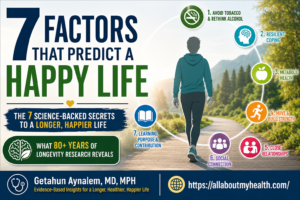
Below are the seven habits most strongly linked to better health and well‑being—presented in a clear, actionable format.
Key Principles
- Don’t smoke. Quitting at any age improves health and reduces premature mortality.
- Use alcohol cautiously. Less is better; don’t start drinking for health reasons.
- Build resilient coping skills. How you respond to stress shapes long‑term well‑being.
- Protect metabolic health. Focus on sustainable habits, not the scale alone.
- Move daily and build strength. Activity supports physical and mental health.
- Invest in supportive relationships. Quality matters more than quantity.
- Keep learning and contributing. Purpose and mental stimulation support healthy aging.
You don’t need to master all seven at once. Start with the area that represents your biggest opportunity.
1. Avoid Tobacco and Rethink Alcohol
Tobacco is one of the clearest threats to longevity. Smoking harms blood vessels, increases inflammation, raises cardiovascular risk, and accelerates lung disease. The CDC notes that quitting even later in life can add years to life expectancy.
Alcohol is more nuanced. Older public-health messages suggested moderate drinking might help heart health, but current evidence is more cautious. Even moderate drinking can increase certain risks, and heavier drinking clearly raises the likelihood of illness, injury, and early death.
Longevity rule: Don’t use alcohol as a health strategy. If you drink, drinking less lowers risk.
Try This
- Set a specific quit‑smoking goal.
- Identify triggers (stress, driving, social settings) and plan alternatives.
- Consider counseling or medication for smoking cessation.
- Track alcohol intake for two weeks to spot patterns.
- Try alcohol‑free days or weeks.
- If you don’t drink, don’t start for health reasons.
Longevity lesson: Protecting your lungs and heart protects your ability to stay active, independent, and mentally engaged.
2. Cope With Stress Without Letting Stress Run Your Life
Stress is unavoidable. What matters is how you respond when life doesn’t go as planned.
The Harvard study highlights the role of psychological defenses—the ways people cope with adversity. Constructive coping includes reframing challenges, accepting reality, seeking solutions, using humor, asking for help, and delaying impulsive reactions.
This isn’t about forced positivity. It’s about psychological flexibility: noticing your emotions, accepting what you can’t change, and choosing a useful next step.
Three‑Step Reset
- Name it: What am I actually feeling?
- Reframe it: What part of this is within my control?
- Act: What is the smallest, helpful step I can take?
You can also ask: What might I learn from this?
Longevity lesson: Resilience is not the absence of stress—it’s the ability to recover and adapt.
3. Protect Metabolic Health—Not Just Your Weight
Weight matters, but it’s only one piece of metabolic health. As we age, visceral fat, insulin resistance, high blood pressure, abnormal lipids, and low muscle mass can increase disease risk.
A longevity‑focused approach emphasizes metabolic health, not crash dieting.
Core Habits
- Eat mostly minimally processed foods.
- Prioritize protein, vegetables, fruits, whole grains, and fiber.
- Include healthy fats.
- Maintain regular physical activity.
- Get adequate sleep.
- Prevent or manage hypertension, diabetes, and dyslipidemia.
Body composition naturally changes with age. Intentional weight loss may be appropriate for some, but extreme dieting and weight cycling undermine long‑term health.
What to Monitor
Discuss these with your healthcare professional:
- Waist circumference
- Blood pressure
- Fasting glucose or A1C
- Cholesterol and triglycerides
- Strength and fitness
- Body composition changes
Try This
Build meals around a simple formula: Protein + plants + fiber‑rich carbohydrate + healthy fat.
Repeat the basics. A sustainable eating pattern you can follow for years is more valuable than a restrictive diet you can maintain for three weeks.
Longevity lesson: The goal is not to weigh less—it’s to stay metabolically healthy, physically capable, and independent.
4. Move Every Day—and Build Strength
If a medication improved cardiovascular fitness, mood, metabolic health, and independence all at once, it would be revolutionary. Regular physical activity comes close.
The World Health Organization recommends:
- 150–300 minutes of moderate aerobic activity per week
- or 75–150 minutes of vigorous activity
- plus, muscle‑strengthening activities at least twice weekly.
- Older adults should add balance training to prevent falls.
You don’t need to run marathons. Walking, cycling, swimming, dancing, gardening, and active transportation all count.
Your Movement Portfolio
- Aerobic fitness: Brisk walking, cycling, swimming, jogging
- Strength: Resistance training for major muscle groups
- Balance: Crucial for fall prevention
- Mobility: Comfortable range‑of‑motion work
- Daily activity: Stairs, chores, errands, walking breaks.
Try This
Start with:
- 30‑minute brisk walk × 5 days
- Strength training × 2 days
- Brief balance or mobility work most days.
If you’re inactive, begin smaller and build gradually.
Longevity lesson: The goal isn’t just to live longer, it’s to stay strong enough to enjoy those extra years.
5. Invest in Deep, Supportive Relationships
One of the clearest findings from the Harvard study is the importance of relationship quality. Supportive relationships protect emotional and physical health throughout adulthood.
This is not a prescription to get married. A happy life doesn’t require a spouse. What matters is feeling known, supported, and valued—and offering support in return.
Supportive relationships can include:
- Partners
- Close friends
- Siblings
- Adult children
- Extended family
- Neighbors
- Mentors
- Community members
A long‑standing relationship can still be unhealthy. Quality matters more than status.
Try This
- Schedule connection—put it on your calendar.
- Listen before trying to fix it.
- Express appreciation clearly and specifically.
- Repair conflicts instead of avoiding them.
- Create rituals: weekly meals, walks, calls, or gatherings.
Longevity lesson: Relationships are not optional extras—they are part of a healthy life.
6. Build Your Social Fitness
Social fitness is different from relationships. You can be partnered and lonely—or live alone and feel socially rich.
Social fitness means maintaining meaningful connection across changing life stages. The U.S. Surgeon General notes that social isolation increases premature mortality and raises cardiovascular risk.
Try This
Treat social connection like a weekly health habit:
- Contact one person you care about
- Participate in one group activity.
- Spend time face‑to‑face when possible.
- Volunteer or contribute to your community.
- Maintain relationships across generations.
Do not wait until loneliness hits—connection works best as a routine.
Longevity lesson: Social connection is a protective behavior, not an emergency fix.
7. Keep Learning, Contributing, and Having a Reason to Get Up
A healthy brain needs stimulation, but “brain games” alone are not the answer. The National Institute on Aging notes that learning new, challenging skills may support cognitive health.
Another key factor is generativity, the desire to contribute to future generations. Teaching, mentoring, creating, guiding, or helping others adds meaning and strengthens emotional well‑being.
Try This
Choose one activity that is:
- New: You have not mastered it
- Difficult: It requires attention
- Meaningful: You care about it
Then add one contribution: Who can benefit from what I know?
Longevity lesson: A longer life feels richer when it includes curiosity, purpose, and contribution.
The 7‑Factor Longevity Framework
Think of these habits as an interconnected system—not seven separate rules.
Weekly Scorecard
| Factor | Weekly Goal | Your Check |
| 1. Tobacco & Alcohol | No tobacco; minimize alcohol | ☐ |
| 2. Resilient Coping | Reframe, accept, solve, or seek support | ☐ |
| 3. Metabolic Health | Whole foods, adequate protein/fiber, monitor key markers | ☐ |
| 4. Movement & Strength | 150+ minutes + strength 2× weekly | ☐ |
| 5. Close Relationships | Meaningful, uninterrupted connection | ☐ |
| 6. Social Fitness | Regular contact and community participation | ☐ |
| 7. Learning & Purpose | Learn, create, mentor, or contribute | ☐ |
Choose the area where your checkmark is weakest. Start there.
Your 7‑Step Longevity Action Plan
- Identify your biggest risk.
Smoking? Inactivity? Social isolation? Stress? Poor metabolic health? Loss of purpose?
- Choose one measurable behavior.
“I will walk 30 minutes after dinner five days this week.”
- Make the healthy choice easier.
Put shoes by the door. Schedule workouts. Keep healthy foods visible. Remove tobacco. Plan calls.
- Protect your relationships.
Choose three important people. Ask: When did I last connect meaningfully? Then act.
- Measure what matters.
Track blood pressure, waist circumference, activity, strength, sleep, metabolic markers, social connection, and well‑being.
- Review every Sunday.
What worked? What did not? What will I adjust next week?
- Think in decades.
What kind of 80‑, 90‑, or 100‑year‑old do you want to become? What are you doing today to support that future?
What the 80‑Year Lesson Really Means
Healthy aging is multidimensional. Cardiovascular health, physical fitness, coping skills, relationships, social connection, intellectual engagement, and purpose all matter—and they reinforce one another.
Exercise can be social. Learning can create purpose. Purpose can motivate activity. Strong relationships can buffer stress. Metabolic health supports the physical capacity needed to stay engaged.
Longevity is not about chasing a single biomarker or miracle supplement. It’s about building a life that supports healthspan—more years of clear thinking, independent movement, deep connection, meaningful contribution, and joy.
Bottom Line
The most powerful longevity strategy is simple and practical:
Don’t smoke. Drink less. Protect metabolic health. Move daily. Build strength. Cope constructively. Invest in relationships. Stay socially connected. Keep learning. Contribute to others.
None of these guarantee a long life. But together, they dramatically improve the odds of reaching older age with something even more valuable than longevity: the ability to enjoy it.
A longer life is only one goal.
The better goal is to live HAPPIER, longer, age smarter, and remain strong enough—physically, mentally, and socially to make those additional years count.
________________________________________
Frequently Asked Questions
1. What is the strongest predictor of a happy life?
The research does not identify one universal predictor that guarantees happiness. However, the Harvard Study of Adult Development has repeatedly highlighted the importance of warm, supportive relationships and relationship quality for health and well-being across adulthood.
2. Can changing habits in midlife still improve longevity?
Yes. Many important risk factors remain modifiable throughout adulthood. Smoking cessation increased physical activity, improved diet, healthier alcohol use, and better management of cardiovascular and metabolic risk factors can improve health even when changes begin later in life. The CDC specifically notes that quitting smoking benefits people of any age.
3. How much exercise do adults need for healthy aging?
The WHO recommends at least 150–300 minutes of moderate aerobic activity per week, or 75–150 minutes of vigorous activity, plus muscle-strengthening activities on at least two days each week. Older adults with mobility limitations should also incorporate balance-focused activity.
4. Does drinking alcohol help you live longer?
Alcohol should not be started for the purpose of improving health or longevity. Current CDC guidance emphasizes that drinking less lowers risk compared with drinking more, and even moderate consumption can carry health risks compared with not drinking.
5. Can lifelong learning protect the brain?
Learning and cognitively stimulating activities may support cognitive health, and some studies have found benefits from learning novel, challenging skills. However, no hobby or commercial brain-training program has been proven to prevent dementia. NIA recommends viewing cognitive engagement as one component of a broader healthy-aging strategy.