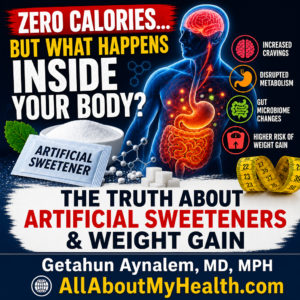
A zero-calorie sweetener sounds like the perfect solution: enjoy sweetness without the calories, reduce sugar intake, and support weight loss.
But the science behind artificial sweeteners and weight gain is more complicated.
Some studies suggest these sugar substitutes may help people reduce added sugar intake and manage blood glucose. Other research raises concerns about possible effects on:
- Appetite and cravings
- Metabolism
- Gut microbiome balance
- Fat storage
- Long-term weight regulation
So, what should you believe?
The answer is not simply “artificial sweeteners are good” or “artificial sweeteners are harmful.”
The evidence suggests something more nuanced:
Artificial sweeteners may be useful tools for some people but they are not a magic solution for weight loss, and their long-term metabolic effects remain under investigation.
Key Takeaways: Artificial Sweeteners and Your Weight
- Artificial sweeteners are low- or no-calorie sugar substitutes used in thousands of foods and beverages.
- Research shows mixed results: some studies find benefits for reducing sugar intake, while others link higher consumption with obesity risk.
- Short-term clinical trials generally do not show direct weight gain from artificial sweeteners.
- Long-term observational studies have found associations between frequent use and higher body fat.
- Individual responses may depend on genetics, eating patterns, gut microbiome, and lifestyle.
- The healthiest strategy is using sweeteners strategically while emphasizing whole foods.
Why This Topic Matters
Artificial sweeteners are in thousands of products: diet sodas, protein shakes, yogurts, “zero‑sugar” snacks, and even medications. As obesity rates rise, many people rely on these sweeteners to cut calories. But emerging research suggests the relationship between artificial sweeteners and weight is not as simple as “fewer calories = weight loss.”
What Are Artificial Sweeteners?
Understanding Non-Nutritive Sweeteners
Artificial sweeteners, also called non-nutritive sweeteners (NNS), are substances that provide intense sweetness with little or no calories.
They activate sweet taste receptors on the tongue but provide minimal energy compared with sugar.
Common artificial sweeteners include:
- Aspartame — found in many diet beverages and sugar-free products
- Sucralose — used in drinks, baked goods, and packaged foods
- Saccharin — one of the oldest artificial sweeteners
- Acesulfame potassium (Ace-K) – commonly combined with other sweeteners
Natural low-calorie sweeteners such as stevia and monk fruit extract are often discussed separately because they come from plant sources.
Why Artificial Sweeteners May Affect Weight Beyond Calories
For decades, weight management was based on a simple equation:
Fewer calories consumed = easier weight loss
However, researchers now understand that metabolism involves complex biological systems.
Artificial sweeteners may influence:
- Appetite Regulation
Some researchers suggest that sweet taste without calories may affect hunger signals.
Possible effects include:
- Increased cravings for sweet foods
- Changes in appetite hormones
- Reduced satisfaction from food
However, human studies have produced inconsistent results.
- The Gut Microbiome
The gut microbiome contains trillions of microorganisms involved in digestion and metabolism.
Some studies suggest certain artificial sweeteners may:
- Alter gut bacterial composition
- Influence glucose metabolism
- Affect metabolic signaling
However, these effects vary significantly between individuals.
- Brain Reward Pathways
Sweet taste activates reward centers in the brain.
One theory is that consuming sweetness without calories may create a mismatch between:
Sweet taste → expected energy → actual energy received
Researchers are studying whether this disconnect influences eating behavior.
What Does the Latest Research Say About Artificial Sweeteners and Weight?
Randomized Controlled Trials: Short-Term Effects
Clinical trials are considered some of the strongest evidence for determining cause and effect.
Many short-term randomized studies show:
- Artificial sweeteners do not directly cause weight gain.
- Replacing sugary drinks with diet beverages may reduce calorie intake.
- Some individuals experience modest weight loss.
Evidence strength: Moderate
Observational Studies: Long-Term Associations with weight gain
Large population studies have found that frequent artificial sweetener users often have:
- Higher body mass index (BMI)
- Greater waist circumference
- Increased obesity risk
However, these studies cannot prove that sweeteners caused weight gain.
A major challenge is reverse causality:
People at higher risk of weight gain may choose diet products because they are already trying to lose weight.
Laboratory and Animal Research
Animal studies have raised concerns about possible effects on:
- Gut bacteria
- Glucose regulation
- Appetite
- Body fat accumulation
However, animal findings do not always translate directly to humans.
Potential Benefits of Artificial Sweeteners
Artificial sweeteners are not automatically harmful. They may provide benefits in certain situations.
- Lowering Added Sugar Intake
Replacing sugar-sweetened beverages with low-calorie alternatives can reduce:
- Total calorie intake
- Added sugar consumption
- Blood glucose spikes
- Supporting Diabetes Management
For many people with diabetes, non-nutritive sweeteners can provide sweetness without significantly increasing blood glucose.
They may help individuals transition away from high-sugar foods.
- Short-Term Weight Management Support
When artificial sweeteners replace high-calorie sugar sources, they may help some people reduce calories.
The key factor is what they replace.
Replacing soda with water provides a different metabolic outcome than replacing soda with a diet beverage while continuing a highly processed diet.
Possible Risks and Concerns
Increased Hunger and Cravings
Some individuals report:
- More cravings for sweets
- Increased snacking
- Difficulty feeling satisfied
If artificial sweeteners trigger overeating, they may work against weight goals.
Metabolic Effects
Researchers continue investigating whether certain sweeteners influence:
- Insulin sensitivity
- Glucose metabolism
- Fat storage pathways
Gut Microbiome Changes
Emerging research suggests artificial sweeteners may influence gut bacteria, but the clinical importance of these changes remains uncertain.
Artificial Sweeteners Compared With Other Sweet Options
| Option | Weight Impact | Considerations |
| Artificial sweeteners | Mixed | May reduce calories but effects vary |
| Sugar | Higher risk | Adds calories and increases metabolic burden |
| Stevia/Monk fruit | Generally neutral | May be useful alternatives |
| Water/unsweetened beverages | Best choice | No calories or sweetener effects |
Who May Benefit From Artificial Sweeteners?
Artificial sweeteners may be helpful for:
- People reducing sugary beverage intake
- Individuals managing diabetes
- Those transitioning away from high-sugar diets
- People seeking lower-calorie alternatives
Who Should Use Caution?
Consider limiting artificial sweeteners if you notice:
- Increased hunger after consuming them
- Strong sweet cravings
- Reliance on highly processed “diet” foods
- Heavy daily diet soda consumption
Children should generally avoid excessive intake because long-term developmental effects remain uncertain.
7 Practical Ways to Use Artificial Sweeteners More Wisely
- Treat Them as a Tool — Not a Foundation
A diet centered around whole foods is more important than the type of sweetener you choose.
- Reduce Dependence on Sweet Flavors
Gradually decrease sweetness levels by:
- Drinking more water
- Choosing unsweetened tea
- Eating naturally sweet foods like fruit
- Monitor Your Personal Response
Pay attention to:
- Hunger levels
- Cravings
- Energy changes
- Weight trends
Your response may differ from someone else’s.
- Prioritize Protein and Fiber
Protein-rich foods and high-fiber foods improve:
- Fullness
- Blood sugar control
- Appetite regulation
- Choose Whole Foods First
Examples:
- Vegetables
- Fruits
- Legumes
- Nuts
- Whole grains
- Lean proteins
Frequently Asked Questions
Do artificial sweeteners directly cause weight gain?
Current evidence does not prove that artificial sweeteners directly cause weight gain. However, frequent use is associated with higher obesity risk in some population studies.
Are diet sodas bad for weight loss?
Diet beverages may help some people reduce sugar intake, but others may experience increased cravings or appetite.
Which artificial sweeteners have raised the most research questions?
Aspartame, sucralose, and saccharin have been widely studied, including their potential effects on metabolism and gut health.
Are stevia and monk fruit better alternatives?
They appear metabolically neutral for most people, but they should still be consumed as part of an overall healthy eating pattern.
Can artificial sweeteners affect gut bacteria?
Some studies suggest they can influence gut microbiome composition, but the long-term health significance is still being studied.
Should children use artificial sweeteners?
Use caution; long‑term data is limited.
Are they safe for people with diabetes?
Generally, yes, but monitor appetite and cravings.
What Scientists Still Do Not Know
Important unanswered questions include:
- How decades-long consumption affects health
- Whether individual genetics influence response
- Which sweeteners have the greatest metabolic effects
- How microbiome changes affect long-term outcomes
The Bottom Line: Should You Avoid Artificial Sweeteners?
Artificial sweeteners are neither a miracle weight-loss solution nor proven metabolic toxins.
The current evidence suggests:
What we know: Artificial sweeteners don’t directly cause weight gain in short‑term trials, but long‑term use is associated with increased body fat in some populations. They can reduce sugar and calorie intake for some people.
What remains uncertain: Their long-term effects on metabolism, Individual variability, microbiome effects, appetite, and body composition.
The healthiest approach: Use artificial sweeteners as a tool occasionally and strategically while building your diet around whole foods, adequate protein, fiber, hydration, exercise, and healthy lifestyle habits.
Medical Disclaimer
This article is intended for educational purposes only and does not replace personalized medical advice. Consult a qualified healthcare professional regarding dietary choices, diabetes management, or weight concerns.
Read more at: https://allaboutmyhealth.com
GLP 1 Drugs and Longevity: What Science Really Says
The Science and Art of Longevity: Aging Better Naturally
Stress Less & Live More: 10 Proven Ways to Boost Mental Health